The Vase in the Vestry: On Church Flowers and the Labour of Delight
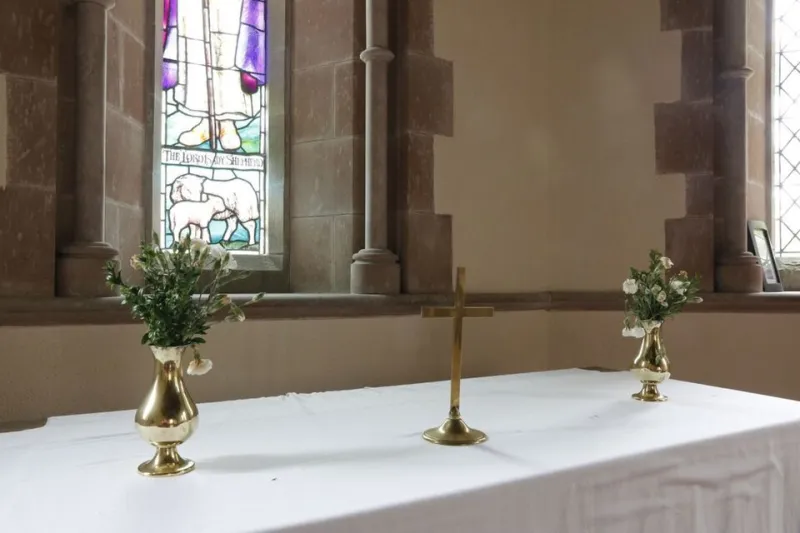
Photo: Bill Nicholls , CC BY-SA 2.0, via Wikimedia Commons
On a Saturday afternoon, when the town is busy with shopping and football, a small door beside the church porch is usually open. Inside, someone is holding a bunch of chrysanthemums at arm's length, turning it this way and that. The flowers are not for a stage. They are for a nave, a Lady Chapel, a shelf behind the votive stand. By Sunday morning they will be part of the furniture of prayer, and almost nobody will know who put them there.
The rota as a small creed
The flower rota is a modest document. It is pinned to a noticeboard in the vestry, or kept in a plastic wallet in the churchwarden's bag. It has names in pencil, because names change. It has crossings-out, because funerals arrive and weddings are moved and someone's back is bad that week. It is not a grand statement of belief. It is a list of who will bring the dahlias when the dahlias have gone over, and who will find something green in November when the garden has given up.
Faithfulness is often described as a feeling. The rota suggests otherwise. Faithfulness is a name in a column and a bucket of water in the vestry. It is the decision to arrange flowers for a congregation you will not count, for a service you may not attend, in a building that will be cold. It is a creed said with secateurs.
The people who do this work are not usually the ones who speak at meetings. They are the ones who notice that the altar arrangement has gone brown at the edges. They are the ones who know which vases leak and which pedestals wobble. They carry beauty into the building in the same way other people carry chairs: without ceremony, and mostly out of sight.
Beauty that is not asked to justify itself
In a culture that audits everything, flowers are a mild provocation. They do not raise money. They do not improve attendance figures. They cannot be measured in outcomes or reported in a spreadsheet. They are there because a room where people will confess, mourn, marry and receive bread ought not to be ugly.
This is not decoration for its own sake. It is a form of hospitality. A church is a public room, and the flowers are one of the ways it says that the people who come into it matter. The arrangement does not need to be expert. It needs to be attentive. A few stems in a plain vase can do more for a grieving family than an elaborate pedestal that looks as if it is trying to make a point.
The ministry of ordinary beauty is easily overlooked because it is ordinary. It does not announce itself. It simply makes the room slightly more habitable for prayer. It is a reminder that beauty is not a luxury added to faith after the serious business is done. It is one of the ways faith attends to the world.
For grief and for joy
Funeral flowers are different. They arrive with instructions, or with the weight of an occasion that nobody wants to get wrong. White lilies, restrained greenery, a ribbon with a name. The flower team reads the room. They know that a funeral arrangement should not compete with the family's grief. It should hold it.
Weddings are different again. There is confetti and pedestals and a photograph on the steps. The flowers are part of a promise being made in public. The volunteers who arrange them are not wedding planners. They are neighbours with a bucket and a van, doing what they can so that the day feels like a day.
Between the wedding and the funeral is the ordinary Sunday. The flowers are changed, or not changed. The water is topped up. A stem is cut. Someone notices that the chrysanthemums are lasting well. The congregation sings. The flowers say nothing.
The cost that stays in the vestry
Some flower arrangers buy from their own pockets. Some grow their own. Some reuse what can be reused and compost what cannot. Church budgets are tight, and flowers are often the first line to be trimmed. The work continues anyway, because someone has decided that the room should not be bare.
No invoice is sent. No thank-you is expected, though it is welcome. The ministry of ordinary beauty is not a performance. It is a maintenance of attention. It is the quiet insistence that the places where people meet God and one another should be tended, not merely used.
On Sunday morning the flowers will be there. They will be seen for a moment, perhaps, and then forgotten. That is the point. They are not there to be admired. They are there to make the room fit for what happens in it.