The Gap in the Column: Rotas, Reliability and the Grace of Not Being Indispensable
Photo: Dunkley, Harold Vaughan, Public domain, via Wikimedia Commons
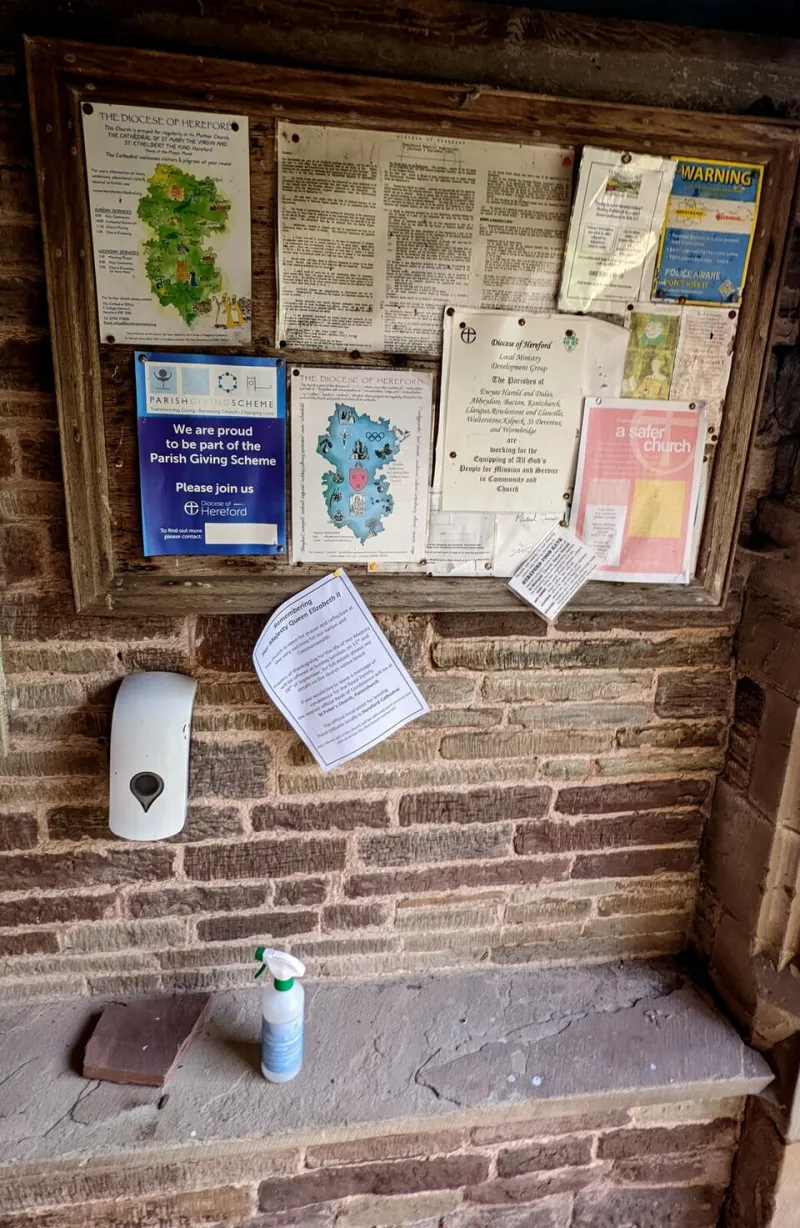
In the porch of a parish church in a market town, between the noticeboard and the leaflet rack, a clipboard hangs from a hook. It holds a sheet of A4 paper, a grid of dates and duties, and a biro on a string. The columns are headed with words that sound administrative — coffee, readings, welcome, wash-up — but the document is not really administrative. It is a record of promises. In 2026, when diaries are crowded and volunteering is often presented as a lifestyle choice, the humble rota still asks an older question: will you be there when it is not convenient?
The Clipboard as a Small Covenant
A rota is not a contract. A contract specifies penalties; a covenant carries a person. When someone writes their initials in a box, they are not merely filling a slot. They are saying, in a small and practical way, that they will be present for others. The theologian may speak of fidelity, but the parishioner knows it as turning up. The rota is a school of reliability, and reliability is one of the quietest forms of love.
This is why the paper rota has survived the spreadsheet. An online sign-up tool can fill a schedule more efficiently, and there is nothing wrong with efficiency. But the clipboard has a human scale. The handwriting varies. Someone has crossed out a name and written another in the margin. The biro on the string is a small admission that pens go missing. The document is imperfect, and that imperfection is part of its honesty.
When the Column Is Blank
The test of any rota comes not when everyone arrives but when someone does not. A gap appears. The coffee urn is unplugged; the reading is not prepared; the night shelter's bedding is still in the cupboard. The immediate instinct is to solve the problem, and often someone does. But before the solution, there is a question: what does the gap mean?
It is possible to treat the gap as a moral failure. The rota can become an instrument of shame, a public record of who is dependable and who is not. But the Christian tradition has always been suspicious of the pressure to be endlessly available. It knows the difference between faithfulness and works-righteousness, between service and performance. A community that cannot tolerate a gap will soon demand more than any person can give. It will confuse the kingdom of God with a well-run organisation.
The Grace of the Gap
The gap is also where grace becomes visible. Someone steps in without being asked. Someone else notices that the person who missed has been caring for a sick parent, or is newly bereaved, or simply exhausted. The rota, which looked like a list of duties, turns out to be a map of mutual dependence. The blank space is not the end of the community; it is an invitation for the community to become itself.
This is not an argument for unreliability. It is an argument for a reliability that has room for repentance and rest. The person who misses a week is not outside the covenant; they are being carried by it. The person who covers is not earning a reward; they are practising the ordinary grace of showing up for someone else. The rota teaches both.
Reliability Without Rigidity
There is a danger, of course, that the rota becomes an idol. It can reward the person who never says no and quietly punish the person who does. It can turn a gift into an obligation and an obligation into resentment. In 2026, the technology of volunteering makes this easier than ever. A slot can be filled with a click; a reminder can be sent automatically; an absence can be logged. None of this is wrong, but it can obscure the fact that a rota is made of people with limits.
The better way is to treat the rota as a tool and not a master. It should be reviewed, not venerated. It should have space for a smaller yes — one Sunday a month rather than four, a behind-the-scenes task rather than a public one. It should make it possible to say, 'I cannot do this week, but I can do next.' The covenant is not broken by honest limits; it is strengthened by them.
A School of Showing Up
What the rota teaches, in the end, is a particular kind of freedom. It frees us from the tyranny of mood. On the Sunday when we do not feel like it, the name in the box is a small external structure that holds us to our better self. It also frees us from the illusion of indispensability. The church will survive our absence. The coffee morning will go on. The night shelter will be staffed. This is not a threat; it is a comfort. We are not the saviour of the rota. We are one of its servants.
And when we are the one who needs to be carried, the rota gives us a way to receive. Someone else's name is in the box. Someone else is making the coffee. The grace of the gap is that it makes room for us to be neighbours rather than providers.
In the porch, the clipboard will eventually be replaced. The paper may give way to an app; the biro on a string may become a QR code. But the question will remain. Who will be there? And when we are not, will there be grace? The name on the rota is not a demand for perfection. It is a quiet covenant of showing up — and a promise that, when we cannot, the community will still be there.