The Bench Outside Plot 14: Allotments and the Gift That Asks for Nothing
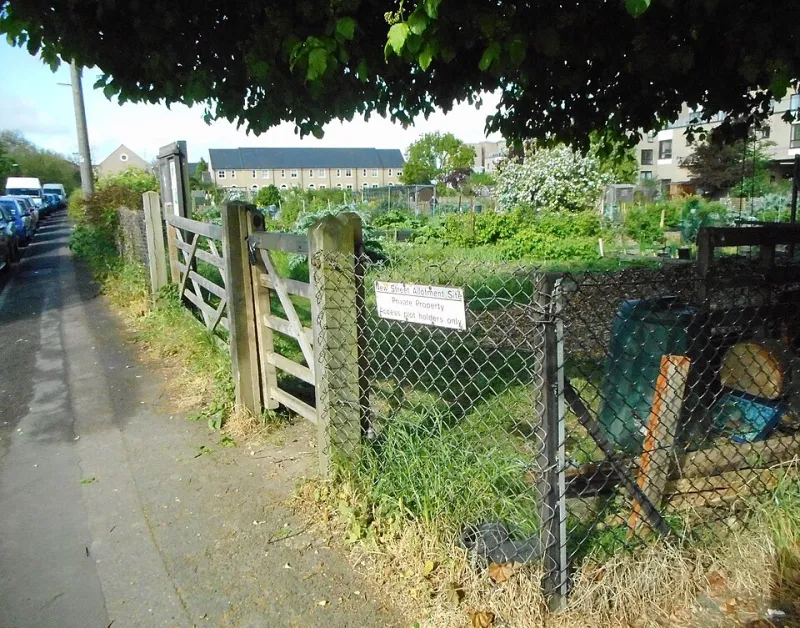
Photo: Richard Sutcliffe , CC BY-SA 2.0, via Wikimedia Commons
By late July the bench outside plot 14 is doing a brisk, silent trade. There are courgettes, some of them the size of a forearm. There are runner beans in a carrier bag. There is a marrow with a handwritten note that says, simply, 'please'. No price. No honesty box. No QR code. The bench is not a shop. It is a place where surplus is left for whoever needs it, and it works because people have learned to take what is offered and leave what is not needed.
A gift with no receipt
Allotment sites are one of the few places in Britain where a glut can be left in public and expected to disappear into someone's kitchen. The spare courgette is not charity in the formal sense. It is excess offered without assessment. The giver does not know who will take it. The taker does not have to explain why they wanted it. There is no means test, no application form, no thank-you card required.
This is a moral economy, though nobody would call it that while holding a trowel. It runs on gifts rather than transactions. A transaction requires symmetry: money for goods, time for service, a receipt for both sides. A gift is asymmetrical. It creates a small debt that is not meant to be repaid to the giver, but passed on somewhere else.
The bench outside plot 14 is therefore a tiny institution. It teaches people to receive without embarrassment and to give without fuss. It assumes that neighbours are not customers, and that a community is not a service delivered but a surplus shared.
The rules that are not written
Allotment committees have rule books. There are rules about hedges, sheds, water butts and the height of grass. There are rules about bonfires and chickens and the width of paths. But the moral economy of a site runs on conventions that never appear in the minutes.
You water a neighbour's tomatoes when they are away. You do not need to be asked. You do it because you would want the same, and because a plot that dies of thirst is a small tragedy that everyone feels. You lend a rotavator and you do not charge for it. You leave a few seed packets in the communal shed. You put the hose back where you found it. You take one courgette, not six.
These conventions are a form of insurance without a policy. They assume that people will be absent, forgetful, ill or simply overwhelmed. They assume that the plot is not only a private project but a shared place. The rules are unwritten because they are not enforced by fines. They are enforced by reputation, memory and the awkwardness of being the person who never gives back.
Waiting lists and the common plot
Allotment waiting lists in many towns are long. Land is under pressure. Councils balance housing targets against green space, and allotments are often caught in the middle. The result is that a plot can feel like a prize, and a prize can encourage people to think of the site as a collection of private territories.
And yet the gift economy persists. It persists because the site is also a public place, with gates and paths and a bench that anyone can use. It persists because gardening is seasonal and uncertain. One year the courgettes are abundant; the next year the slugs win. The person who leaves a marrow on the bench today may be the person who takes a bag of beans in August.
Plot holders come from many backgrounds. There are retired couples and young families, people who grow for the table and people who grow for the quiet. They do not agree on everything. They may disagree about bonfires and bindweed. But they share a piece of ground, and sharing ground makes small kindnesses practical.
What the spare courgette refuses
In a culture that prefers transactions, the unasked-for gift is faintly embarrassing. It cannot be priced, scored or reviewed. It does not come with terms and conditions. It asks the receiver to accept a small asymmetry and to trust that the giver is not keeping score.
That is why the bench outside plot 14 matters. It is a small refusal of the idea that all exchange must be measured. It is a reminder that community is often built not by grand projects but by surplus left where someone else can find it.
The courgette will not change the world. But it may change the way someone thinks about their street, their neighbours, their own excess. It may teach them that the best gifts are the ones that ask for nothing in return, and that a bench can be a kind of commons.