The Four Numbers in the Porch: On Choosing Hymns for People You Have Not Yet Met
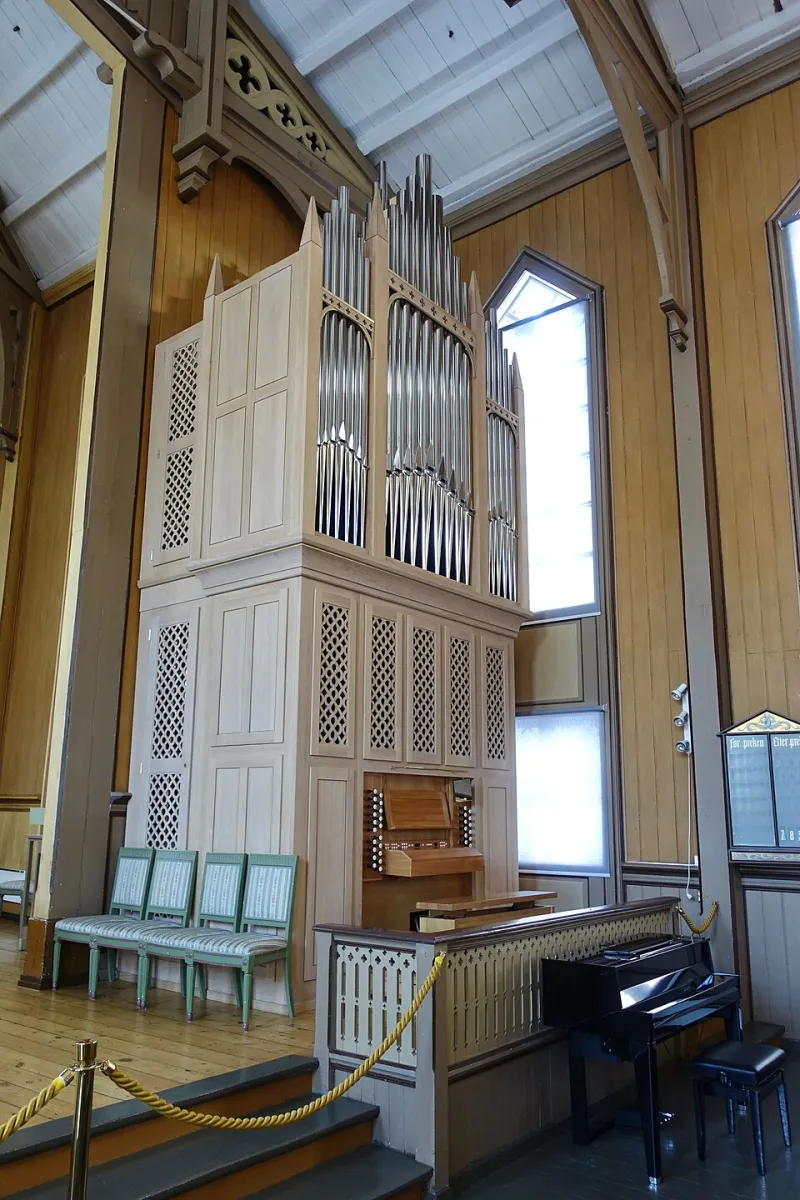
Photo: Wolfmann, CC BY-SA 4.0, via Wikimedia Commons
On a wet Sunday morning in November, the first thing many worshippers see is not the altar but the hymn board. It stands in the porch, or just inside the door, a wooden frame with slots for four numbers. The numerals are often felt, sometimes plastic, occasionally chalked by hand. By the time the congregation arrives, the choice has already been made. Someone has stood there in the week, box of digits open, and decided what this room will sing.
A small public square
A hymn board is a modest piece of furniture, no larger than a tea tray, but it is a public square. It tells a congregation what it will sing, in what order, and therefore something about the shape of the hour. It is also a quiet contract: organist, choir, projector operator and congregation all agree to meet at the same number. In churches where screens have replaced books, the board may look obsolete. Yet many congregations keep it, and not only out of nostalgia. The board makes the choice visible. It says that these words, and not others, have been deliberately placed before us.
Choosing for people you have not met
The person who sets the numbers is usually not the vicar. They may be a churchwarden, a retired teacher, the organist's spouse, or a member of the worship committee with a good memory and a box of numerals kept in the vestry cupboard. They are unpaid, and their work is rarely announced. But they are choosing for people they have not yet met that week: the widower who finds one tune unbearable, the family with small children who need a chorus they can catch, the visitor who knows only the old favourites, the choir member who can reach the descant and the alto who cannot.
This is pastoral care without a pastoral visit. It is also an act of hospitality. A well-chosen hymn can settle a restless room; a poor one can make a congregation feel like spectators at someone else's taste. The volunteer is not simply filling slots. They are reading a community, half from memory and half from instinct, and trying to find words that will hold.
Memory, taste and theological judgement
Hymn selection is never neutral. Hymns are theology set to music, and they are also memory set to music. The same text that consoles one person may reopen a grief for another. A tune associated with school assemblies may feel like home to one generation and like a period piece to the next. The volunteer must weigh the liturgical season, the lectionary, the sermon, the musical resources of the building and the limits of the room. Taste enters, and so does judgement. There is a difference between a hymn that is merely familiar and one that is true.
This is why the board is a small catechesis. Week by week, it teaches a congregation what it believes by teaching it what it sings. The person with the box of numerals is doing theology with a felt digit, and doing it under the eye of a congregation that will notice if the fourth hymn is too high, too obscure, or too obviously the vicar's favourite.
The unpaid authority
There is no liturgy for this work. The Church has rites for baptism, marriage and burial; it has prayers for the sick and blessings for buildings. It has no ceremony for choosing hymns. The task is absorbed into the rota, passed to whoever is willing, and exercised with a quiet authority that is easy to overlook. That authority can console or irritate. It can stretch a congregation or keep it safe. It can make a stranger feel that there is a place for them, or remind them that they are not yet fluent in the local dialect of praise.
This is the sort of service The Servant attends to: not the pulpit but the porch; not the sermon but the four numbers that prepare the room for it. It is unglamorous, repeatable and easily taken for granted. It is also a reminder that worship is prepared by hands that are seldom seen.
What we sing together
In Remembrancetide, the numbers carry particular weight. The choice of a hymn can gather a parish's grief into a single tune, or leave it scattered. A congregation singing together is doing something no individual can do alone: holding a text in common, breathing in the same rhythm, making a sound that belongs to no one and to everyone. The board makes that possible. It is a small instrument of unity, and like most instruments of unity, it depends on someone doing the unremarkable work beforehand.
After the service, the numbers will be taken down or reset for the evening. The person with the box of numerals will go home for lunch. Few will thank them. But somewhere between the porch and the pew, their decision has already become part of the prayer.