A Small Public Square: The Noticeboard and the Discipline of Being Findable
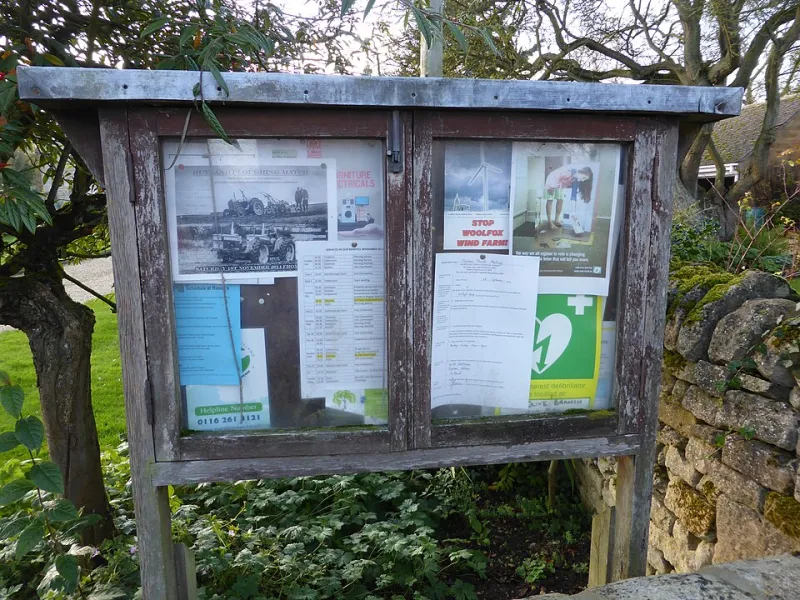
Photo: Bob Harvey , CC BY-SA 2.0, via Wikimedia Commons
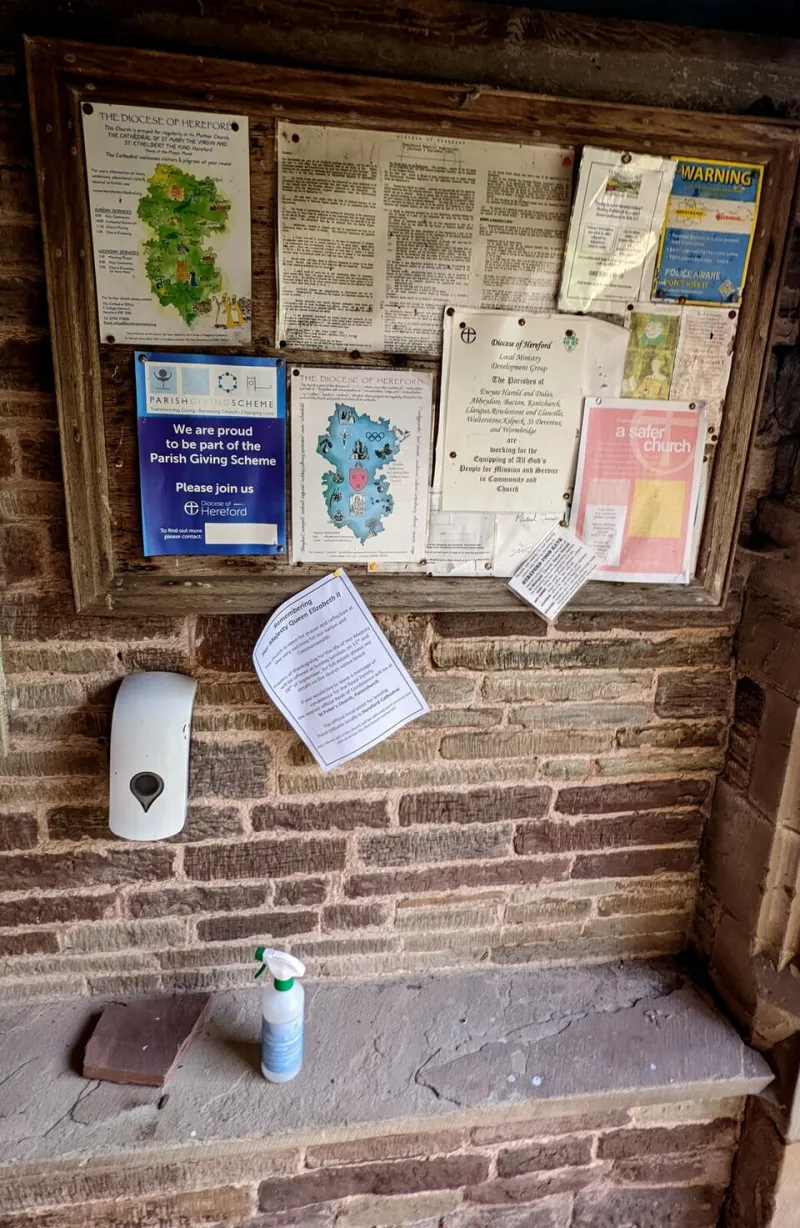
There is a particular sound a noticeboard makes when someone lifts a curled corner to read what lies beneath: a small, dry crackle, like the turning of a page in a book no one has opened for years. The board at the back of the parish hall is not an archive in any formal sense. It has no catalogue, no date order, no custodian with white gloves. Yet it holds the weather of a place. A funeral notice fading beside a yoga class. A food-bank list with a tear-off strip, half taken. A missing cat, photographed in better light. A parish council agenda. A card advertising chiropody. A handwritten offer of a lift to the surgery on Thursdays. The board is a small public square, and like all public squares it is both orderly and unruly, both neglected and essential.
The Surface and Its Scars
Noticeboards are physical before they are social. Cork, glass, sometimes a faded green baize, sometimes a pane that has not been cleaned since the last jubilee. Their materiality matters. A pin leaves a hole. A staple rusts. Sellotape yellows and lifts at the edges. The board records time not by timestamp but by decay. You can tell how long a request has waited by the way the paper has cockled. You can tell that someone cared enough to re-pin a corner that had come loose. You can tell, too, when a board has been cleared by a well-meaning volunteer, and the loss feels oddly like a mild bereavement.
The board is also a discipline of space. It cannot expand. Every new notice is a small editorial decision: what must come down so that this may go up. There is no infinite scroll here, only a finite rectangle and a hierarchy that is never quite agreed. The funeral notice and the missing cat do not compete; they coexist because the board has room for both grief and contingency. That coexistence is not sentimental. It is a practical theology of attention, worked out in cork.
An Unruly Cartography of Care
The categories on a noticeboard are not clean. Need sits next to leisure; memory next to commerce; the urgent next to the merely useful. A food-bank collection point may be pinned above a Zumba class. A notice about a memorial service may share a corner with a request for jam jars. This is not confusion. It is the actual shape of a community, which never arranges itself into tidy departments. The board is a map of weak ties, the acquaintances and near-strangers who make up the texture of ordinary life.
Sociologists sometimes call this social capital, but the board is more modest than that. It is a place where a person can be findable without being profiled. The missing cat notice does not ask you to create an account. The offer of a lift does not collect your data. The food-bank list does not measure your engagement. The board simply says: here is a need, here is a number, here is a person who thought it worth pinning. To read it is to be addressed, however lightly. To respond is to become, for a moment, the neighbour the notice hoped for.
The Liturgy of the Pin
There is a quiet liturgy in the act of pinning. A request is written, copied, perhaps laminated, and carried to a public place. It is a small act of trust that someone will read it. In theological terms it resembles intercession: the lifting of a need into a shared space, not to control the outcome but to hold it before others. The board does not promise answers. It promises visibility. That is no small thing.
Reading the board is also a form of prayer, though it would be odd to call it that aloud. It asks us to pause before the needs of people we may never meet. It asks us not to solve everything, but to notice. The noticeboard is a school of limited attention. We cannot respond to every card, but we can read without scrolling past. We can take a tab. We can mention the cat to a neighbour. We can turn up. The board trains a habit that is increasingly rare: the habit of being findable in return.
What the Feed Cannot Hold
In 2026 the noticeboard has many rivals. Local Facebook groups, WhatsApp chains, council apps, neighbourhood platforms. These are efficient, searchable, immediate. They can mobilise a village in minutes. But they also sort us. They know who we are, what we click, what we might buy. They reward performance and punish silence. They make need visible, but often only to those already inside the network.
The noticeboard cannot target you. It cannot personalise. It cannot measure. It simply stands there, a shared surface in a shared place, asking to be read by whoever passes. That is its weakness and its grace. It does not demand that we become users. It asks only that we become readers. In a culture of algorithmic feeds, that is a quietly provocative thing: a public square that does not know your name.
A Discipline for 2026
This is not an argument for nostalgia. Digital tools serve real needs, especially for the housebound and the isolated. But the noticeboard offers something the feed cannot: a common surface where the unmeasured and the unmeasurable can still be pinned. Churches and community halls might treat their boards not as clutter but as a ministry of presence. Clear them gently. Date them. Leave room for the handwritten. Put a chair nearby. Notice who reads and who never does.
The board at the back is not the centre of anything. That is precisely why it matters. It is a small public square at the edge of the room, and it asks of us the oldest neighbourly discipline: to be findable, to read what is pinned, and to respond when we can. The cat may still be missing. The food bank still needs tins. But someone has pinned the request, and someone has stopped to read it. In the quiet arithmetic of care, that is already a beginning.