Before the Shutters: Street Sweepers and the Daily Forgiveness of a Town
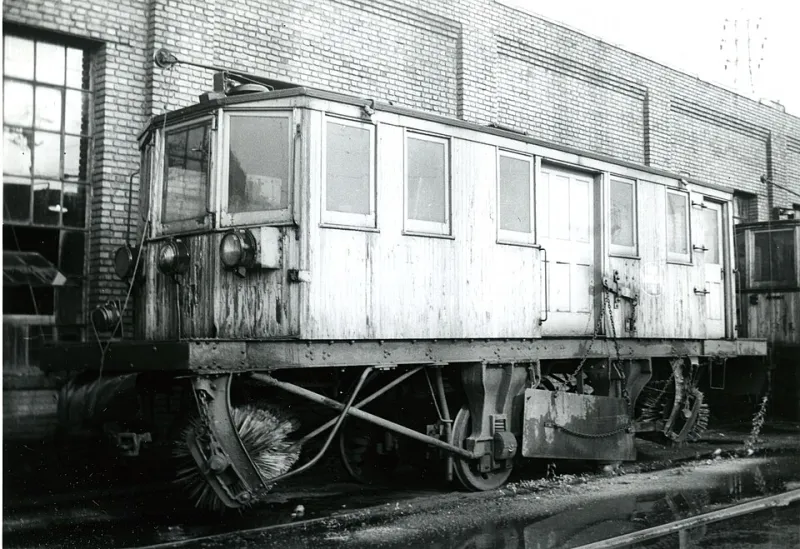
Photo: Unknown, No restrictions, via Wikimedia Commons
At ten past five on a Tuesday in November, the high street is not yet a high street. It is a set of surfaces. The shutters are down. The bins are out. The pavements hold the previous night's litter: a flattened chip box, a bottle, a sheet of newspaper stuck to the kerb. A man in a high-visibility jacket is pushing a barrow along the precinct, a broom in one hand and a dustpan in the other. He is not in a hurry. He is working.
The town before it is a town
By eight o'clock the commuters will arrive. They will see clean pavements and assume they were always clean. They will not see the sweeper, because he will have gone. This is the first thing to understand about street cleansing: it is judged by absence. If it is done well, nobody notices. If it is not done, it becomes a scandal.
The street sweeper is the first reader of the night's debris. He knows which takeaways leave the most rubbish, which doorway is used as a shelter, which corner collects the wind. He knows that a broken bottle outside a school gate is not just litter but a hazard. He knows that the town is not a backdrop for other people's lives. It is a place that has to be made usable every morning.
There is a kind of editing in this work. The sweeper removes what should not be in the story. He does not ask who dropped it. He does not moralise. He simply makes the street fit for the day.
The budget line and the invisible shift
Street cleansing is a council service, which means it is also a budget line. Local authorities in Britain have faced years of financial pressure, and visible services are often protected while invisible ones are trimmed. The frequency of sweeping may be reduced. A mechanical sweeper may cover a wider area. A team may be redeployed. The work continues, but with less margin.
This is the paradox of maintenance. It is essential, but it is easy to postpone. A dirty street is not an emergency in the way a broken bridge is. It is a slow erosion of the common good. The sweeper is the person who prevents that erosion, one barrow at a time.
The work is also physical. It is early starts and cold hands. It is bending and lifting and pushing. It is the kind of labour that is often described as unskilled, though it requires attention, judgement and a knowledge of place. The sweeper knows the town in a way that the commuter does not. He knows its habits.
Cleaning as a kind of forgiveness
There is a theological rhythm to street cleansing that is hard to ignore once you have seen it. Each morning, a place is forgiven its yesterday. The litter is removed, the pavement is swept, the bin is emptied. The town is not asked to explain itself. It is simply given another day.
This is not denial. The rubbish was real. The mess happened. But forgiveness is not amnesia. It is a practice of beginning again. The sweeper does not pretend that the street was never dirty. He makes it clean. He does not ask who dropped the bottle. He removes it.
In that sense, the street sweeper performs a civic liturgy. He enacts the belief that a place can be restored, that yesterday does not have to determine today. It is a small, repeated act of mercy. It is also a reminder that forgiveness is often manual. It is not only a word spoken; it is a pavement swept.
What the broom knows about neighbours
The town is held together by people who arrive before the meeting. The sweeper is one of them. He is not a community worker or a counsellor. He does not give advice. But he contributes to the conditions in which community is possible. A clean street is easier to use. A usable street is easier to share.
There is a lesson here for all of us who benefit from work we do not see. The common good is not maintained by enthusiasm alone. It is maintained by people who turn up, often in the dark, and do the same thing again. The broom knows that care is often repetitive. It knows that love of place is not a slogan but a shift.
At first light, the street sweeper finishes his round. The shutters go up. The buses start. The town wakes to a small, unearned mercy. Nobody says thank you. Nobody needs to. The pavement is clean, and the day can begin.