The Lift That Makes the Day: Rural Transport and the Quiet Work of Arrival
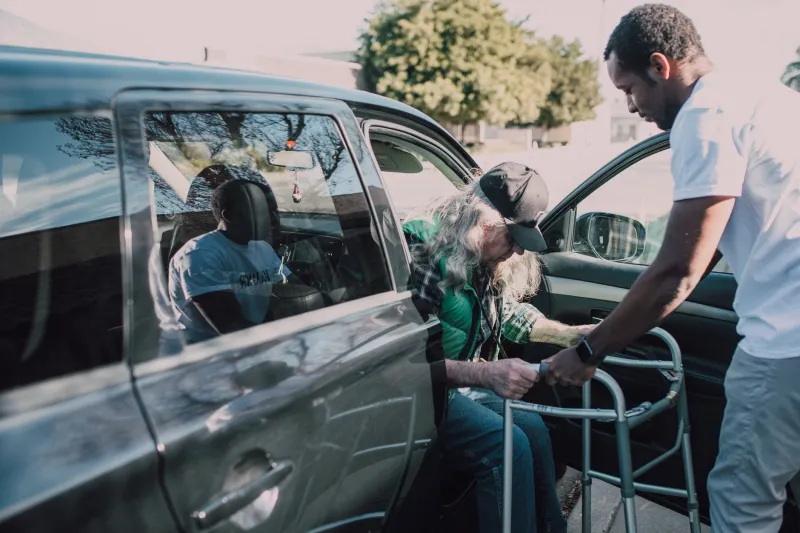
On a Tuesday morning in a market town in Devon, a minibus idles outside a surgery while its driver checks a clipboard. The list is short: four names, two walking frames, one appointment card folded into a coat pocket. The driver knows the route without needing the satnav. He knows which lane floods, which passenger prefers the front seat, and which one will need an extra minute at the door. Nothing about the scene is dramatic. It is, nevertheless, a small act of infrastructure — and of neighbourly care.
Rural transport is often discussed as a problem of distance. That is true enough. In parts of Cumbria, North Yorkshire, mid-Wales and the Scottish Highlands, a doctor's appointment can mean a journey that would be simple in a city and is daunting in a village. But distance is only the surface of the matter. The deeper question is arrival: who gets to reach the places where life is conducted, and who is left waiting.
The timetable as a form of care
Community transport schemes take many shapes. There are volunteer car schemes, dial-a-ride services, church minibuses, and informal arrangements that never appear in a leaflet. Some are run by charities, some by parish councils, some by a rota of drivers who would not describe themselves as a service at all. They exist because the ordinary bus no longer passes, or passes too rarely, or passes at an hour that assumes everyone has a car.
The history matters. The deregulation of bus services in the 1980s reshaped routes across Britain, and many rural services withdrew when they ceased to be commercially viable. Since then, community transport has filled gaps that were never designed to be permanent. It has done so with modest grants, borrowed minibuses and the patience of volunteers. The result is a hidden layer of provision that few people notice until they need it.
What the drivers provide is not simply a lift. They provide punctuality, company, a steady hand on a wet pavement. They provide the assurance that someone will come back. For an older person living alone, that assurance can be the difference between attending an appointment and ignoring a symptom; between joining a Thursday club and spending another week without conversation.
What a route holds together
A route is never only a line on a map. It is a set of relationships. The minibus that carries passengers to a chapel service also carries news, small favours and the ordinary gossip that makes a community feel like a community. The driver who takes someone to the pharmacy may also be the person who notices that the garden has not been touched, or that the curtains have stayed closed.
This is why the loss of a route is rarely felt as a single loss. It is a cancellation of appointments, a thinning of congregations, a quiet withdrawal from social life. It can turn a village into a collection of isolated households. The effects are not always visible in statistics. They appear in the surgery's missed appointments, in the chapel's empty pews, in the club that closes because too few people can get there.
In 2026, many schemes are stretched. Volunteers are ageing, fuel and insurance costs have risen, and grants are competitive. Drivers retire and are not always replaced. The minibus itself may be old enough to need costly repairs. These are practical problems, but they are also moral ones. They ask what kind of society we are willing to maintain for people who cannot drive themselves.
Arrival as a neighbourly act
The language of service can become grand, and grand language can obscure the thing itself. The ministry of the minibus is not a ministry of speeches. It is a ministry of turning up. It is the driver who waits ten minutes longer than the schedule allows. It is the passenger who says thank you and means it. It is the small reciprocity of people who may never meet outside the vehicle but who recognise one another as neighbours.
There is a theological dimension here, though it is not always spoken aloud. Faith traditions have long insisted that care for the vulnerable is not an optional extra but a central obligation. The parable of the good Samaritan is not a story about transport, but it is a story about proximity: someone crosses the road, stoops down, and makes arrival possible. Rural transport schemes perform a similar work in a less heroic key. They close distances that ought not to be unbridgeable.
It would be sentimental to pretend that a minibus solves isolation. It does not. But it interrupts isolation. It creates a door through which a person can step back into the ordinary life of appointments, worship, friendship and errand. In a country that often measures service by its scale, there is something quietly provocative about a vehicle that carries only four people and yet carries a whole day.
The driver checks his list once more. The first passenger is already at the gate, coat buttoned, hand on the rail. The day has begun. It is not a large beginning. But it is an arrival, and arrival is no small thing.